Bebefinn Town: Kids House Game
- 3.0
- Rating
- 500.00K
- Installs
- Free
- Price

 Analysis by App-foxy
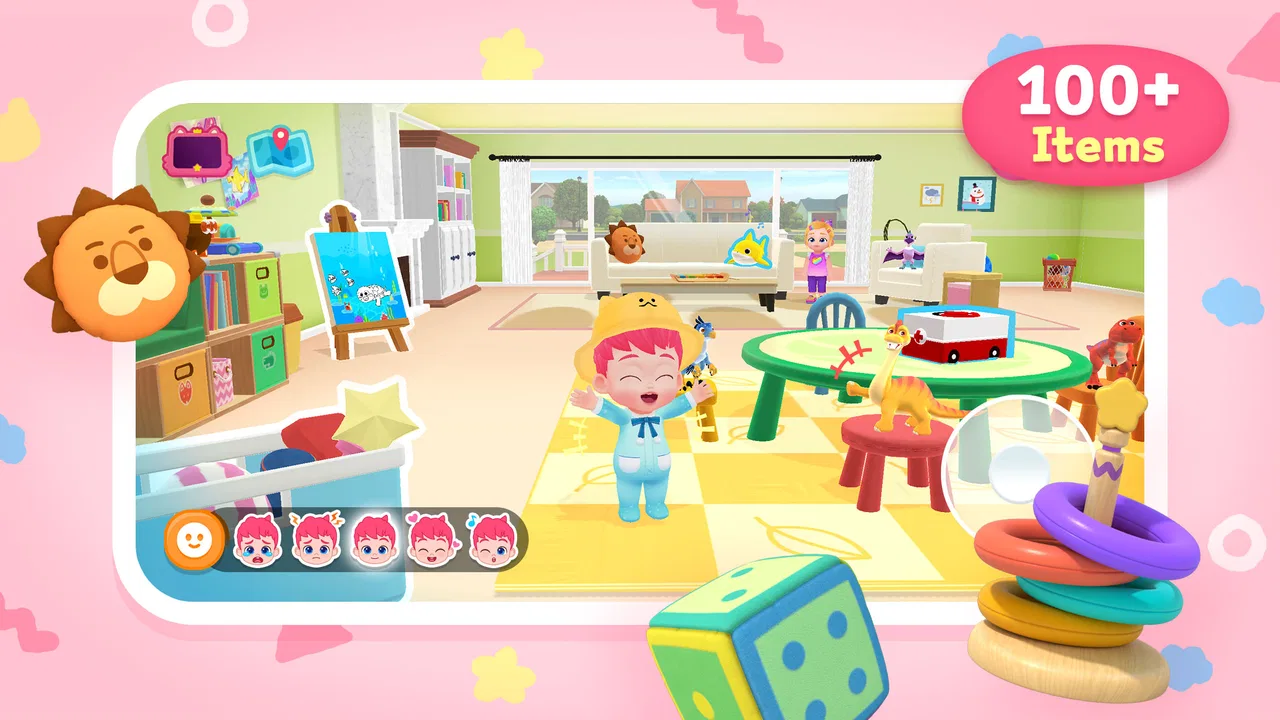
When I tested Bebefinn Town: Kids House Game, I approached it less like a traditional game and more like a small digital play space for a young child. The setting is built around Bebefinn’s house and town, with learning activities presented through familiar characters and everyday surroundings. That makes it easy to understand at a glance, especially for children who already recognize the Bebefinn world.
The game is free to download, which makes trying it with a child straightforward. It belongs to the educational game category and is made by The Pinkfong Company, a developer already associated with children’s entertainment. Its average rating is 3.5 from around 100 ratings, and it has passed 100K installs. Those figures suggest that it has found an audience, although the rating also tells me to keep expectations realistic rather than treating it as a perfect learning tool.
My overall impression is that its biggest strength is approachability. A child does not need to understand complicated rules before beginning. The house-and-town idea gives the experience a recognizable structure, while the learning focus gives parents a clearer reason to choose it over a completely open-ended game. Still, it is best used as a short, shared activity rather than something I would leave running for long periods without adult involvement.
You May Also Like

 Blood Strike: 2.5 Anniversary
Blood Strike’s Loadouts Turn Every Drop Into a Tactical Gamble
A close look at Blood Strike’s custom loadouts: how fast access to signature weapons reshapes its battle royale rhythm, rewards preparation, and narrows the gap between fights.

 Pandora - Music & Podcasts
Pandora’s Music Is Easy to Start, but Harder to Recover
Pandora’s strength is its low-effort path from a seed to a station. Its weak spot is how much confidence it asks you to place in connection, setup, and quiet recovery.

 8 Ball Pool
 Is Built on Rivalries, Rematches, and Routine
A close look at the rivalries, rematches, shared routines, and unanswered safety questions that turn a quick pool match into a persistent mobile community.

 Samsung Music
’s Quiet Strength Is Playing What You Already Own
Its reach comes less from spectacle than from dependable access to a personal library. That simplicity is both the app’s strongest retention engine and its ceiling.

 AccuWeather: Weather Radar
AccuWeather Review: A Quick, Clear Forecast for Everyday Decisions
For everyday plans, the best forecast is the one you can understand quickly. AccuWeather makes rain timing, radar, and local conditions easy to act on, with a few trade-offs.

 Hill Climb Racing
Why Hill Climb Racing Still Turns Crashes Into One More Run
A tiny car, a bumpy hill and one more upgrade: Hill Climb Racing keeps resurfacing because its simple chaos makes every near-miss feel personal.
More From Our News Desk
View All News


How it works on a shared household device
The most natural way to use this game is on a family phone or tablet during a quiet moment. A parent can sit beside a child and let the child choose where to explore, then ask simple questions about what is happening. That turns the screen into a conversation starter instead of a passive distraction. In my experience, this matters more than whether an individual activity feels especially advanced.
A realistic example would be a child waiting while dinner is prepared. I would open the game nearby, let the child spend a short period exploring the Bebefinn house or town, and then use the scenes as prompts: What do you see? Which character is there? What happens when you try this? The adult does not need to take over, but occasional questions help connect the digital activity with language and observation in the real world.
On a shared device, the main practical issue is not learning the controls; it is agreeing who is using the screen and when. A younger child may want to continue after the planned activity, while another family member may need the phone. I recommend deciding the session length before opening the game and handing the device back immediately afterward. This simple routine prevents the app from becoming a source of arguments.
The house setting also makes it suitable for short turns between siblings, but I would not assume that two children will naturally cooperate. One child may want to explore while the other wants to tap everything quickly. Taking turns by location or activity works better than passing the device whenever somebody asks. For a shared household, that small amount of coordination is part of using the game well.
What to do before a child starts playing
Because the game includes optional purchases ranging from $8.99 to $109.99 per item, I would handle the device settings before giving it to a child. The free entry point is appealing, but a child should not be the person deciding whether a purchase is made. I would check the store account, payment confirmation settings, and the device’s purchase protections first, then explain that anything beyond the free experience requires an adult.
This is particularly important on a tablet used by several people. A purchase boundary that works on a parent’s personal phone may not be enough on a family device where children can open the store or use an already active account. I would also avoid handing over the device while the payment screen is open. These are ordinary household precautions, but they make a noticeable difference with children’s games.
The game is marked for Everyone, which fits its child-friendly presentation. That label is useful when choosing content for a family device, but it does not replace supervision. An age rating tells me about the intended audience; it does not tell me whether a particular child will become frustrated, keep asking for more screen time, or understand purchase prompts. I would judge those matters based on the child, not only the label.
The minimum operating system is Android 8.0, so families with older Android hardware should check compatibility before planning around it. On a device that is shared for schoolwork, calls, or other children’s apps, I would also leave enough storage and battery for the session rather than starting when the device is nearly full or about to shut down. Those details are mundane, but they are often what determines whether a child’s first experience is calm or annoying.
The current version is 1.7. I would update it through the normal app store process before introducing it to a child, especially if the device has not been used recently. Keeping the app current is a sensible way to avoid preventable installation or performance problems, though I would still test the opening screen myself first. That gives me a chance to see how the game behaves on the particular phone or tablet the child will use.
Coordinating play without turning it into a lesson
The educational angle works best when adults add a little context without turning every tap into a quiz. I would let the child lead for a while, then connect the activity to something familiar. If the game presents a household situation, I might ask the child to find a similar object at home. If the child encounters a character or place in town, I might invite them to describe what they think is happening.
This approach gives the game a useful role between passive video and formal learning software. Unlike a video, it allows the child to make choices and explore at their own pace. Unlike a structured lesson, it does not require a worksheet or a fixed sequence from the adult. The trade-off is that the learning outcome is less measurable. Parents looking for progress reports, detailed skill tracking, or a clearly staged curriculum may prefer a dedicated learning platform.
I also found that the best sessions have a clear beginning and ending. Before starting, I would name the goal in simple terms: explore the town, try a few activities, or play until a timer ends. At the end, I would ask the child to tell me one thing they noticed. That final conversation helps the experience feel complete and makes it easier to close the app without an abrupt demand.
For siblings, I would use a rotation rather than trying to make both children control the screen together. One child can choose the destination, while the other explains what they see, then they switch roles. This gives the less active child a reason to stay involved. It also reveals whether the game supports the family’s preferred style of play: some children enjoy watching and discussing, while others become impatient if they are not tapping.
A useful household rule is to keep the game on the shared device rather than installing it on every child’s personal device. That makes access easier to discuss and reduces the chance that play continues unnoticed in several places. The downside is that children may compete for the same screen. For families already struggling with device sharing, a separate offline activity may be more peaceful than adding another popular app to the rotation.
Age, trust, and the adult’s role
The child-friendly presentation is reassuring, but I would still play the first session alongside the child. That is not because the game appears difficult; it is because the adult needs to understand the rhythm of the experience. A parent can quickly see whether the child is engaged by exploration, prefers the learning activities, or loses interest once the novelty of the town wears off.
I would also pay attention to how the child handles stopping. Some children can finish a short activity and put the device down, while others treat any pause as a negotiation. If stopping is difficult, I would not blame the game alone. The better response is to shorten the session, announce the final turn, and make the next activity visible before closing the app. The game can fit a household routine, but it cannot create that routine by itself.
Trust matters on a shared device as well. I would tell the child clearly which parts are allowed and which decisions belong to an adult. That explanation is more effective than silently removing the device whenever the child reaches something unfamiliar. It teaches the child that the game is available for play, while purchases and account-related actions remain outside their responsibility.
For very young children, I would expect the adult to do most of the reading or explanation if a prompt is not immediately clear. For children who can navigate independently, I would allow more freedom but still check in occasionally. The same game can therefore serve different family routines, but it should not be mistaken for a substitute caregiver or a complete early-learning program.
The Everyone rating makes it a reasonable candidate for a family library, yet suitability still depends on temperament. A child who enjoys familiar characters and pretend exploration may return to it happily. A child who needs fast rewards, competitive challenges, or a strong sense of progression may find it too gentle. Likewise, older children may outgrow the presentation even if they can technically use it.
Where it stands beside familiar alternatives
Compared with a children’s video app, this game offers more participation. The child is not only watching Bebefinn content; they are interacting with a house and town and engaging with learning-oriented play. That makes it a better choice when a parent wants the screen session to involve decisions and conversation. The compromise is that interactive play requires more supervision than pressing play on a video.
Compared with a dedicated preschool curriculum app, it feels lighter and less formal. I would choose it when the goal is a relaxed activity connected to a familiar character, not when I need a carefully sequenced lesson plan. A curriculum-focused alternative may be stronger for repeated practice and visible skill development, while this game is more comfortable as a flexible break or shared family activity.
Compared with open-ended digital dollhouse games, the educational framing gives parents a clearer reason to introduce it. The Bebefinn setting can also make the first launch less intimidating for a child who already likes the characters. On the other hand, an open-ended alternative may offer more creative freedom for children who want to build their own stories rather than follow the tone of a learning game.
The purchase range is another meaningful difference from completely free offline play. Families that want a no-cost activity with no account or store decisions may be better served by puzzles, drawing, books, or household games. Here, the free download lowers the barrier to trying it, but responsible adults should still treat the purchase options as part of the setup rather than discovering them during a child’s session.
Who will enjoy it, and who should skip it
I think it is a good fit for families with a young child who enjoys Bebefinn, benefits from gentle interactive play, and uses a shared Android device under adult guidance. It is especially appealing when a parent wants to sit nearby for ten or fifteen minutes, talk about what the child is doing, and then move on to another activity.
It is also a sensible choice for grandparents or relatives who want an easy game to explore with a child. The house-and-town concept gives both people something to discuss, even if the adult is not familiar with children’s games. The relative can ask the child to show them around, which reverses the usual teaching role and often makes the child feel confident.
I would skip it if the main requirement is independent, unsupervised entertainment for a long stretch. I would also look elsewhere if I wanted robust parental dashboards, a documented educational pathway, multiplayer cooperation, or a completely purchase-free experience. Those are not small details; they define a different kind of product.
Children who dislike character-based learning games may not connect with it either. The Bebefinn identity is central to its appeal, so a child who prefers action, construction, competition, or realistic puzzles may lose interest quickly. In that case, choosing an app based on the child’s actual play style is wiser than selecting it only because it is labeled educational.
My household verdict
After looking at it as a shared-device game rather than a standalone babysitter, I see Bebefinn Town: Kids House Game as a friendly addition to a young child’s supervised screen routine. Its free starting point, Everyone age label, and approachable Bebefinn setting make it easy to introduce. The developer, The Pinkfong Company, has also chosen a familiar world that gives the activities a consistent identity instead of presenting an anonymous collection of exercises.
The 3.5 average rating means I would recommend trying it personally before promising that it will become a child’s favorite. Around 100 ratings is enough to show some public response, but not enough for me to treat the score as a final verdict for every family. The more useful test is whether the child stays curious, accepts turn-taking, and can finish a session without the game disrupting the household routine.
My practical recommendation is to install it on the device the family actually shares, check the purchase boundaries, open it once without the child, and then begin with a short accompanied session. Let the child explore, ask a few natural questions, and stop while the experience is still positive. That workflow gives the game its best chance to support conversation and learning without allowing it to take over the day.
In the end, I would choose it as a gentle, character-led educational game for shared moments, not as a replacement for books, hands-on play, or a structured learning course. If that is what your household needs, it is worth trying. If you need detailed progress tracking, strong independent-play safeguards, or a zero-purchase environment, another type of app will serve you better.
FAQs for Bebefinn Town: Kids House Game
01What is Bebefinn Town: Kids House Game about?
Bebefinn Town: Kids House Game is an engaging educational app designed for children. It offers a virtual town where kids can explore various locations such as a house, school, and playground. The game encourages creativity and learning through interactive activities, puzzles, and mini-games, making it a fun and educational experience for young minds.
02Is Bebefinn Town: Kids House Game safe for children to use?
Yes, Bebefinn Town: Kids House Game is designed with children's safety in mind. It features a secure environment with no third-party ads, ensuring that kids can play without unwanted interruptions. The app also includes parental controls, allowing parents to manage game time and monitor their child's progress.
03What age group is Bebefinn Town: Kids House Game suitable for?
The game is primarily aimed at children aged 3 to 8 years old. It offers age-appropriate content that helps develop cognitive skills, problem-solving abilities, and creativity. The app's colorful graphics and simple controls make it accessible and enjoyable for young kids, fostering a positive learning environment.
04Does Bebefinn Town: Kids House Game require an internet connection?
Bebefinn Town: Kids House Game can be played offline, which is great for on-the-go entertainment. However, some features or updates may require an internet connection. It's recommended to download any necessary content before traveling or when Wi-Fi is available to ensure uninterrupted playtime.
05Are there in-app purchases in Bebefinn Town: Kids House Game?
While Bebefinn Town: Kids House Game offers a free version with basic features, there are optional in-app purchases available. These purchases unlock additional content and features, enhancing the gaming experience. Parents should ensure that in-app purchases are disabled or password-protected to prevent accidental purchases by children.
Pros
- Engaging and colorful graphics.
- Educational activities for young kids.
- Safe
- ad-free environment.
- Intuitive controls for easy play.
- Encourages creativity and imagination.
Cons
- Limited content in free version.
- Requires internet for updates.
- Not suitable for older kids.
- In-app purchases can add up.
- Occasional bugs and glitches.

Bebefinn Town: Kids House Game
Gallery